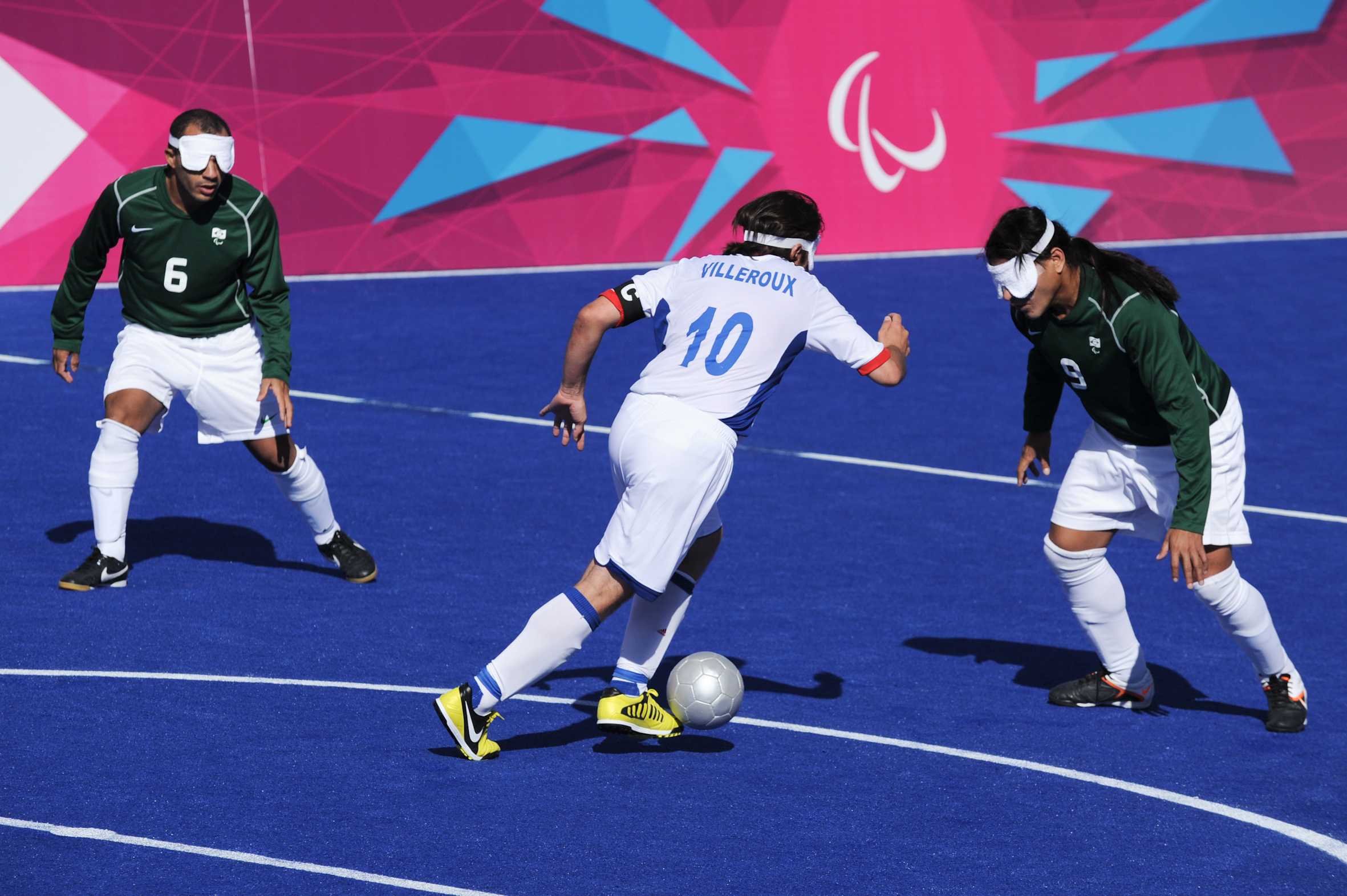


A bit of history
Blind football is an adapted version of football for visually impaired people. Its origins date back to the 1920s in Spain, but it was in Brazil, in the 1960s, that the sport truly took shape with the “5 vs. 5” format. The first Brazilian national championship took place in 1974.
Blind football was born when Brazilian prisoners had the simple but brilliant idea of wrapping a ball in a plastic bag so that it would be audible. This innovation allowed the sport to develop rapidly and reach an ever-growing audience.
In France, blind football emerged in 1987 with the creation of the Saint-Mandé club. The sport was recognized the same year by the Paralympic movement. The first official competitions then took place: the French Championship in 1998, followed by the French Cup in 2000. Blind football made its debut in the Paralympic Games at the Athens Games in 2004.
Today, blind football combines technical skill, tactical intelligence, and teamwork, attracting an ever-growing audience. The enthusiasm generated by the Paris 2024 Paralympic Games is a strong illustration of this and paves the way for the 2026 European Championship in Strasbourg.
First traces of blind football in Spain, played in schools for visually impaired children.
1920Formalization of blind football in Brazil: basic rules and "5 against 5" format.
The arrival of blind football in France with the creation of the Saint-Mandé club.
1987Official recognition by the IBSA (International Federation of Sports for the Visually Impaired).
First appearance of blind football at the Athens Paralympic Games.
2004International blind football competition in Schiltigheim, Stade de l'Aar.
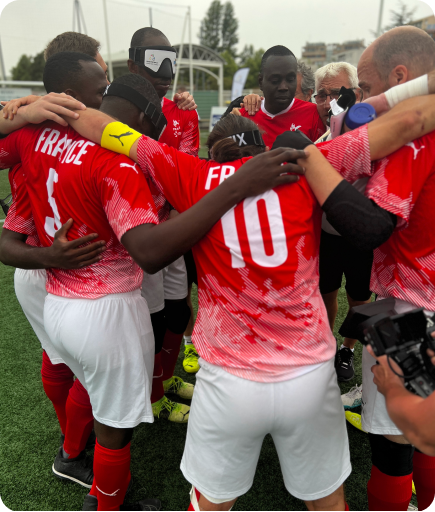
Paris Paralympic Games, GOLD medal for the French team, high visibility for blind football
2024Strasbourg Blind Football European Championship
focus on Paris 2024
Blind football at the Paralympic Games
Blind football was introduced to the Paralympic Games in 2004 in Athens.
The Paris 2024 Games marked a major turning point for the visibility of blind football in France, boosted in part by the gold medal won by the French team.
- Unprecedented media exposure
- The stands were full.
- A better understanding of sport by the general public
Paris 2024 demonstrated that blind football is a high-level, spectacular, and demanding sport, far removed from the stereotypes surrounding disability.
This enthusiasm has significantly contributed to the current momentum surrounding the development of blind football in France and Europe, and in particular to the organization of Euro 2026 in Strasbourg.

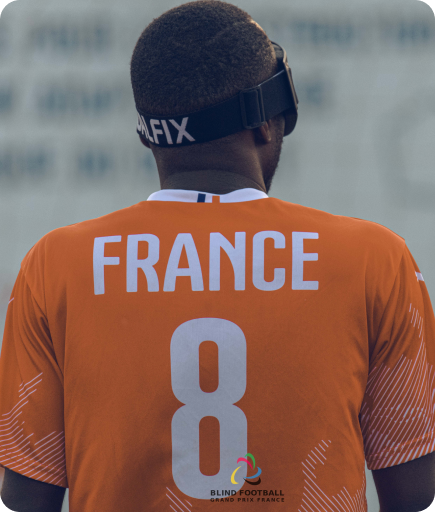
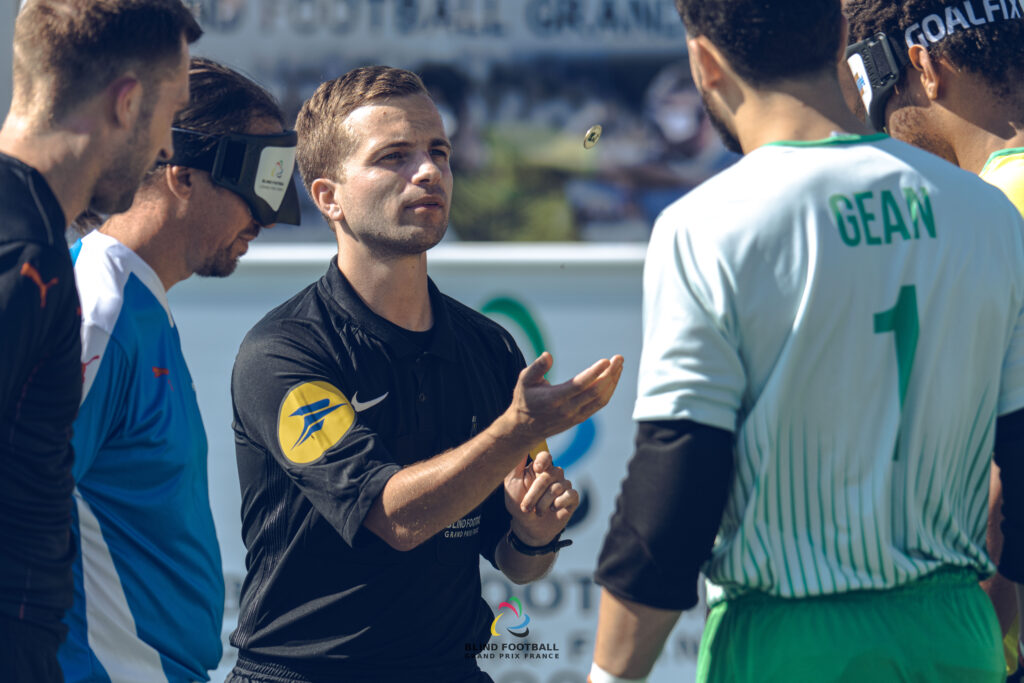
The essential rules
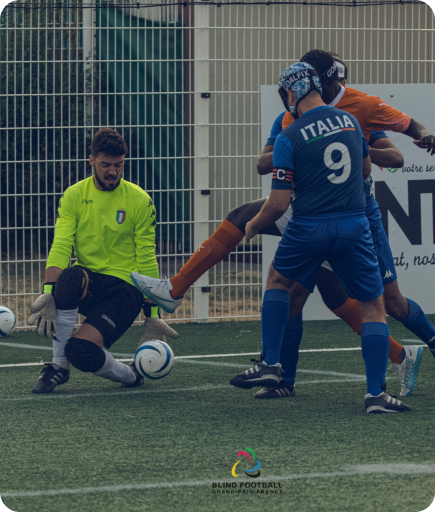
- Two teams of 5 players: 4 visually impaired field players + 1 sighted goalkeeper.
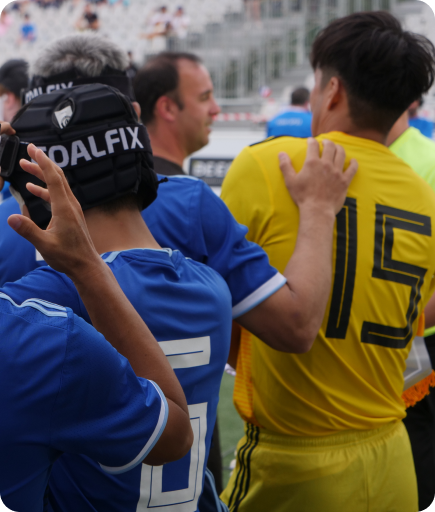
- Field players wear opaque masks to ensure fairness.
- The balloon contains bells to allow for its location by sound.
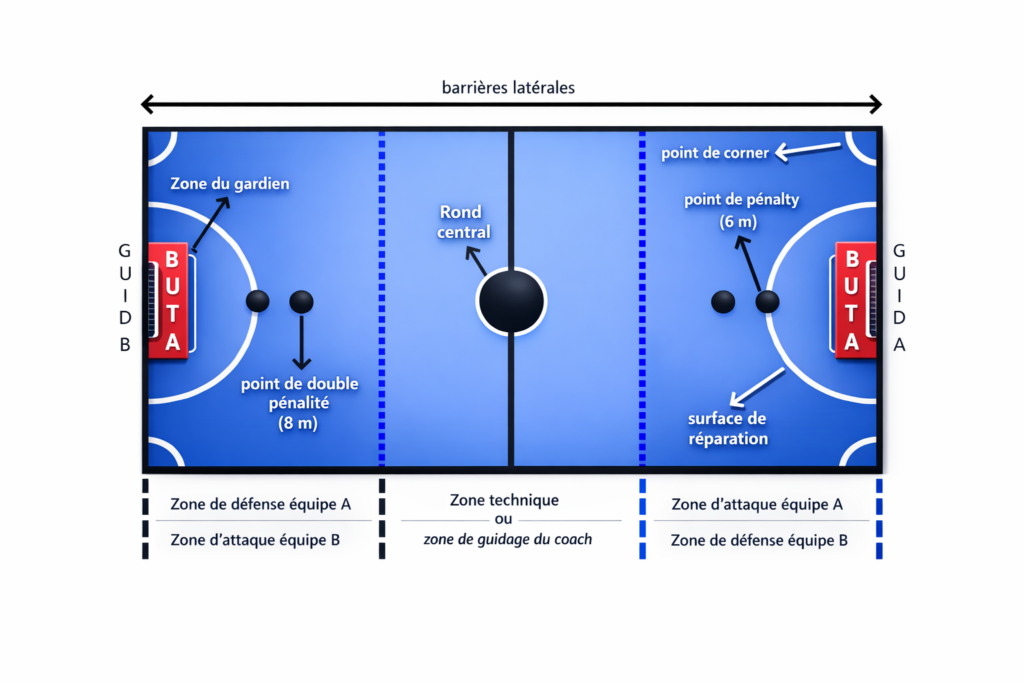
- The field is surrounded by side barriers to keep the ball in play.
- The players announce “Voy!” when they go into a duel to avoid collisions.
- A guide behind the opposing goal helps the attackers orient themselves.
- Matches are played in two 15-minute halves (actual time) with a 10-minute break in between.
The grounds and equipment
- Land of approximately 40 m x 20 m
- Specific sound balloon
- Side barriers approximately 1 m high
- Standardized eye masks
- The audience must remain silent during the game (to allow them to hear the ball).

Documentary resources
This article summarizes the main rules necessary for adapting football for blind and visually impaired people. The full regulations can be found on the IBSA (International Blind Sports Federation) website.
Why blind football is a spectacular sport
Because he asks:
- Extreme listening
- An impressive spatial memory
- Complete trust between teammates
- A very high level of technical mastery
It’s a sport where every action is clear, every goal is an achievement, and every mat


MAKE A DONATION
I'M MAKING A DONATION
Ticket
BUY MY TICKETS